
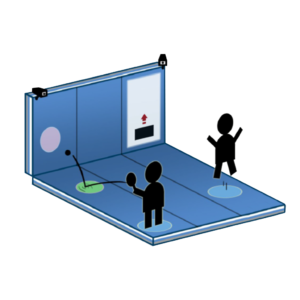
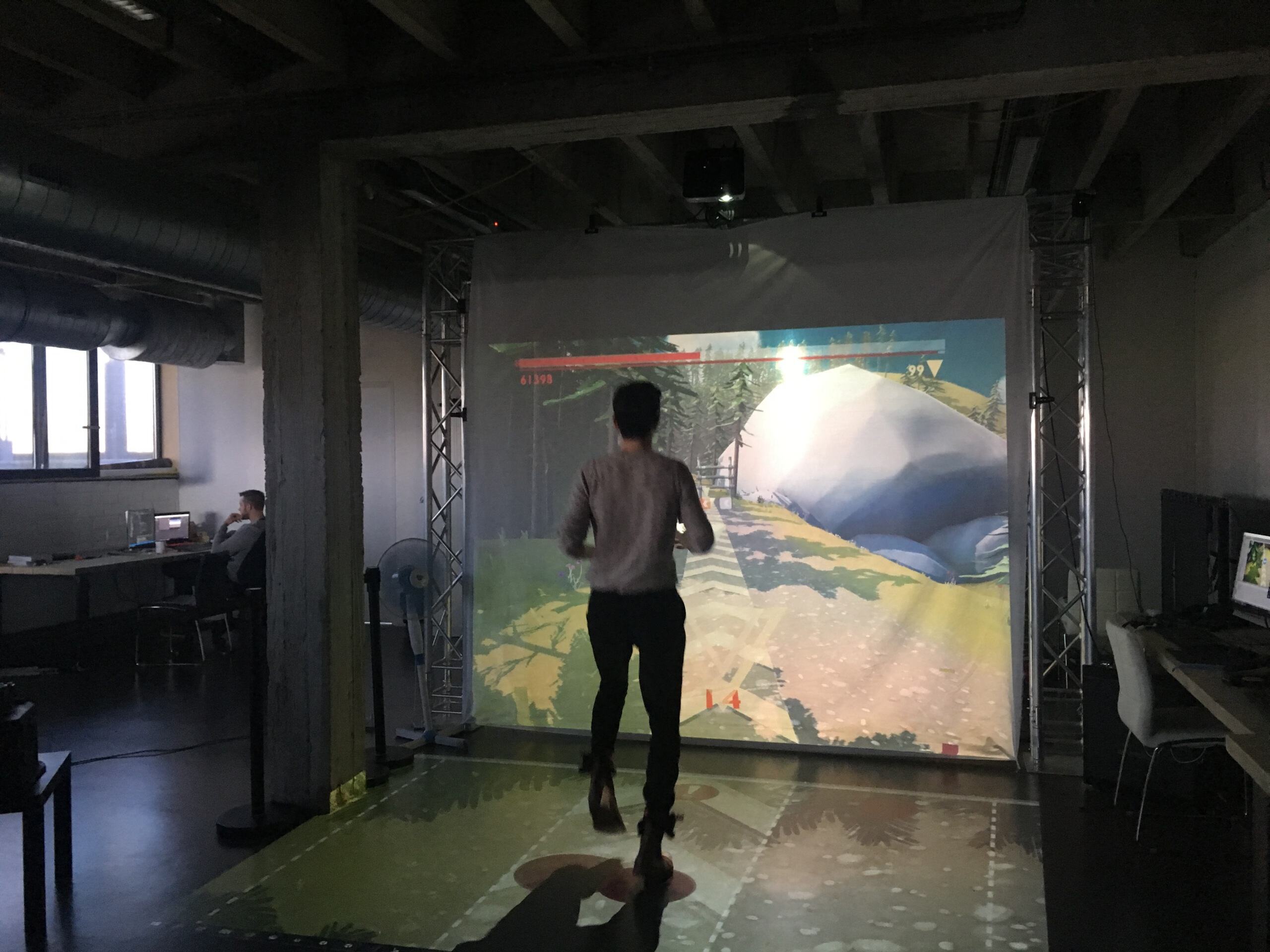
iPlay will target two use cases: recreational sports and fitness on one hand, and rehabilitation in professional athletics on the other.
In the case of fitness, the project aims to apply the technology to generate gamified feedback for more personalized, interactive and engaging fitness practice. The main goals are to stimulate people to move more and better, thus addressing the problem of inactivity and offering qualitative workouts by focusing on monitoring and analyzing training exercises.
For the rehabilitation application, the project aims to monitor patients in realistic environments. The underlying goal is to improve the transition from rehabilitation, to training and finally to full performance – making it as quick and effective as possible.
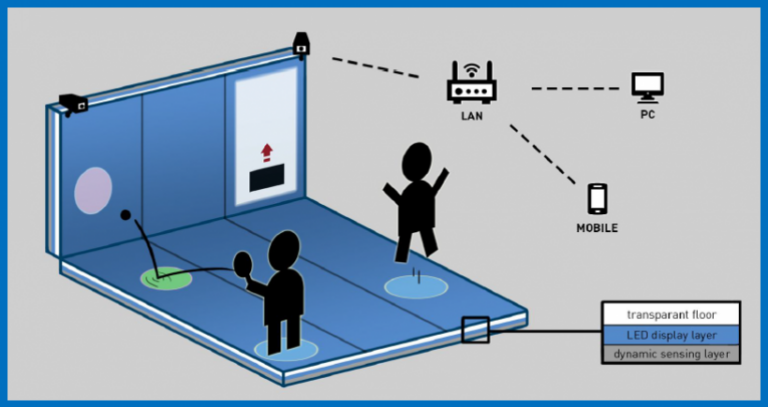
Intuitive, low-latency and suitable for many applications
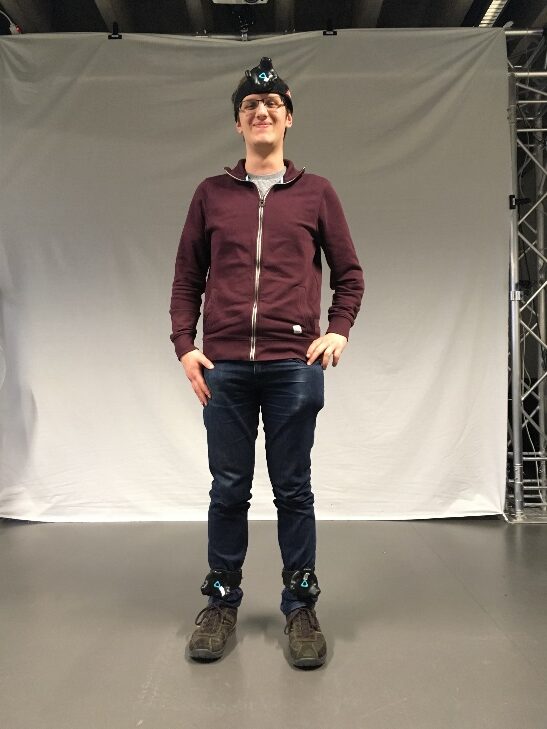
Planned outcomes for the project are varied and include the development of a sensor platform that:
- is modular, and suitable for use in- and outdoors;
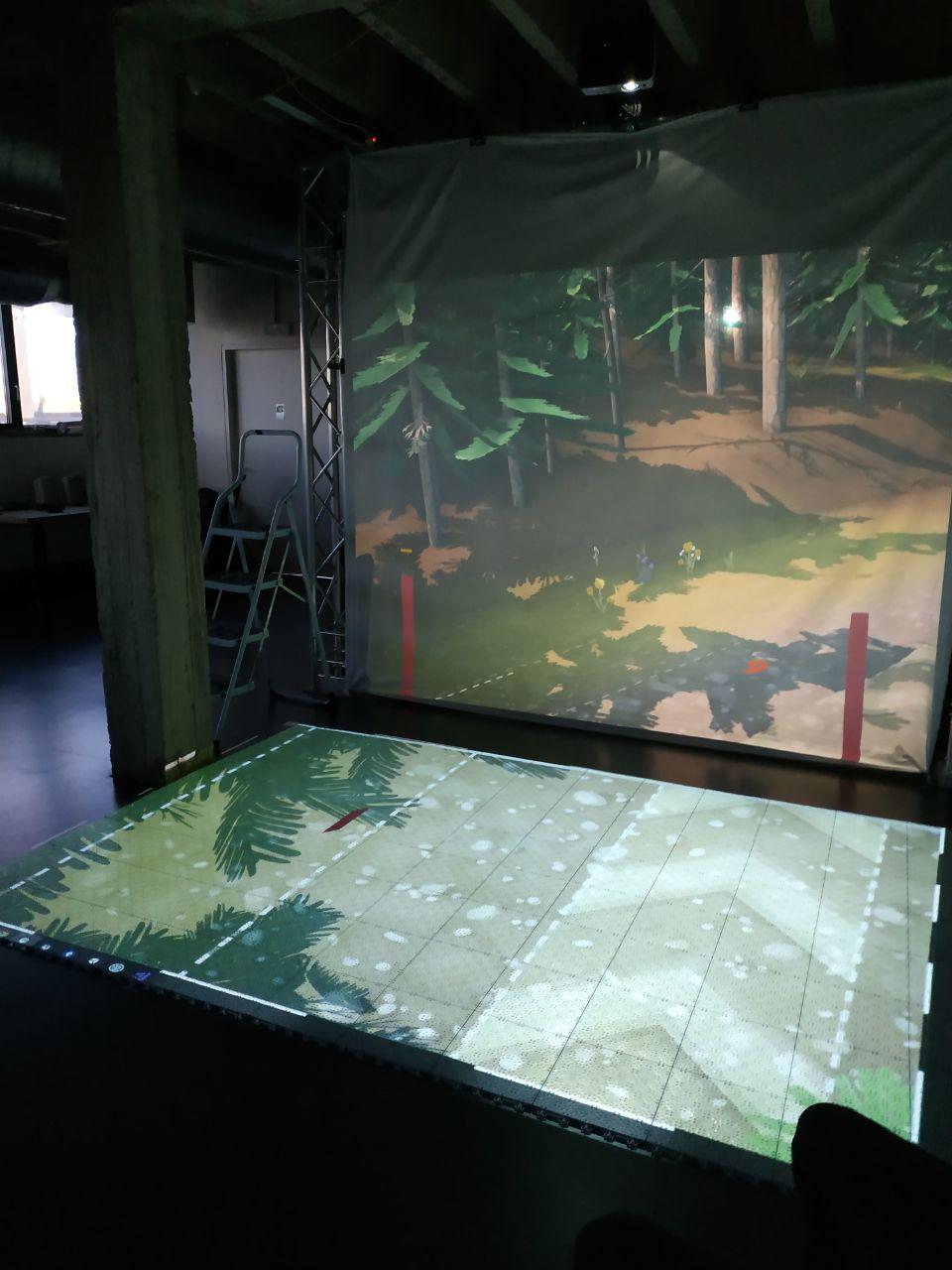
- drives an interactive visualization canvas of 10m2 in size.
The system will be easy to install and configure. It will feature low-delay interaction with the user and an API that enables the system’s use with gaming engines. A minimum of 10 concepts will be developed illustrating the wide range of uses of this technology along with target demographics. Two of these will be developed into proofs of concept.
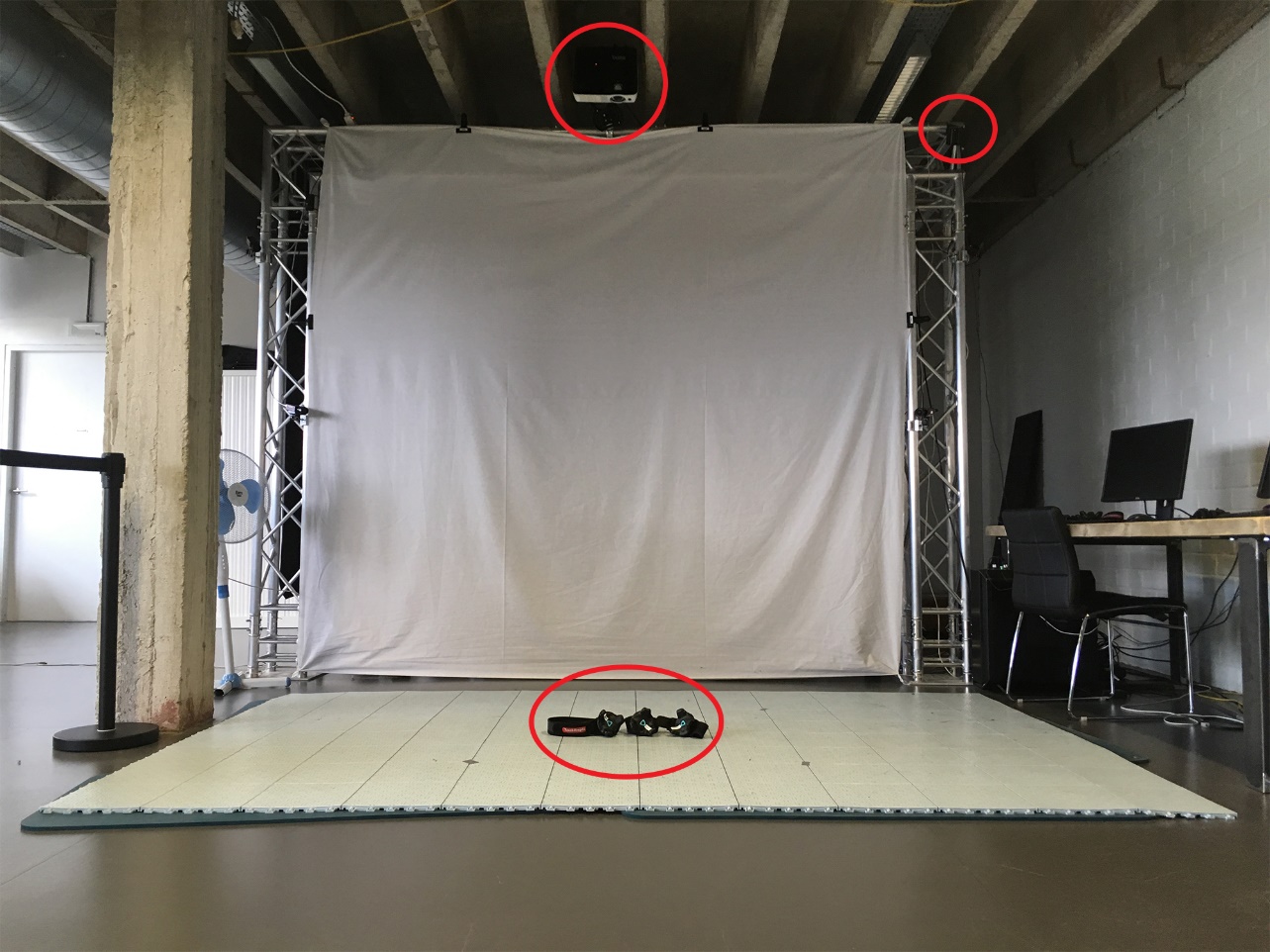
360 degrees of expertise
To develop iPlay technology for these two targeted use cases, the consortium will rely on a cross-domain collaboration between experts in LED visualization, dynamic plantar pressure measurement systems, game design, training and rehabilitation ICT, sensors and user research.