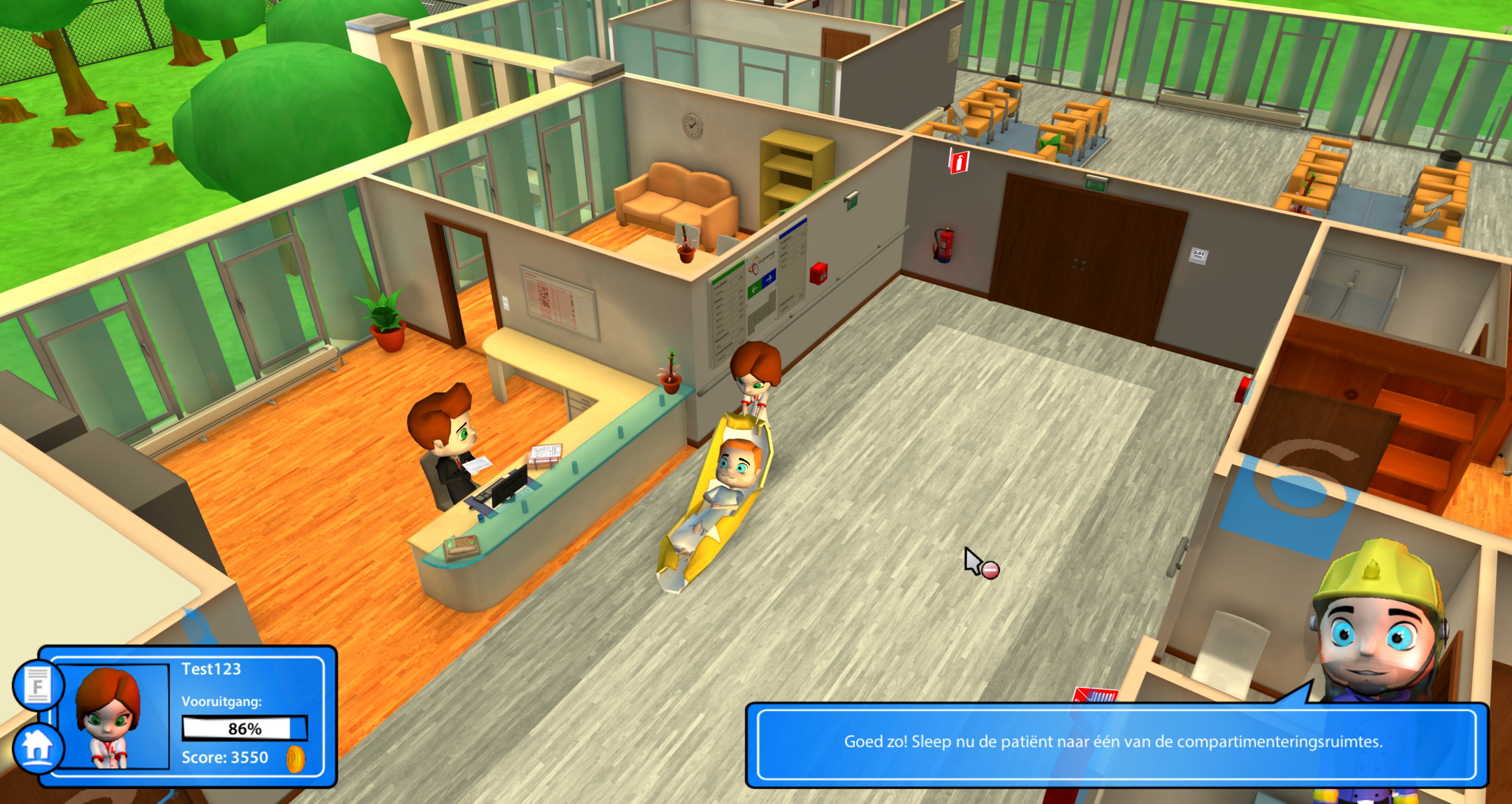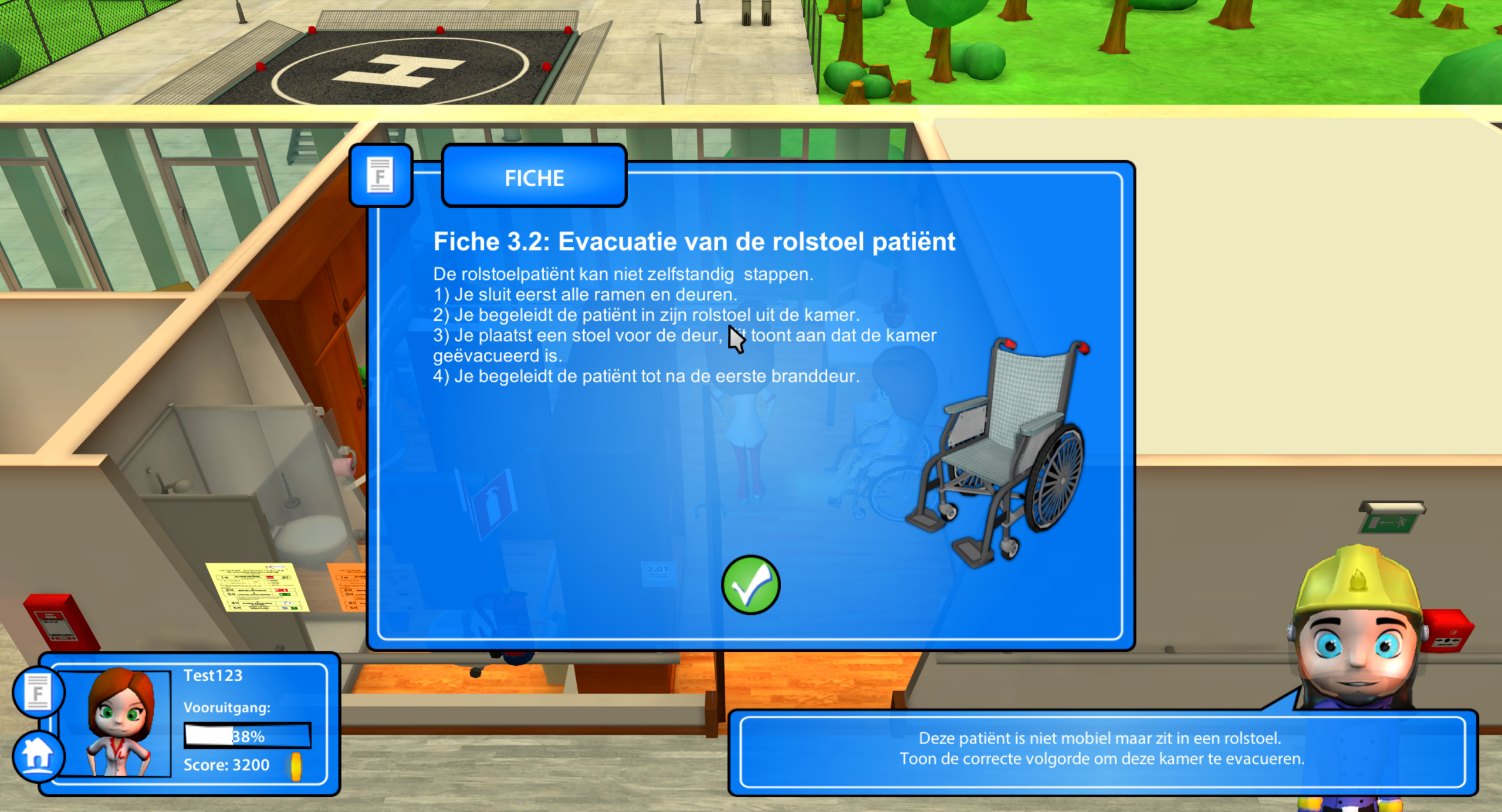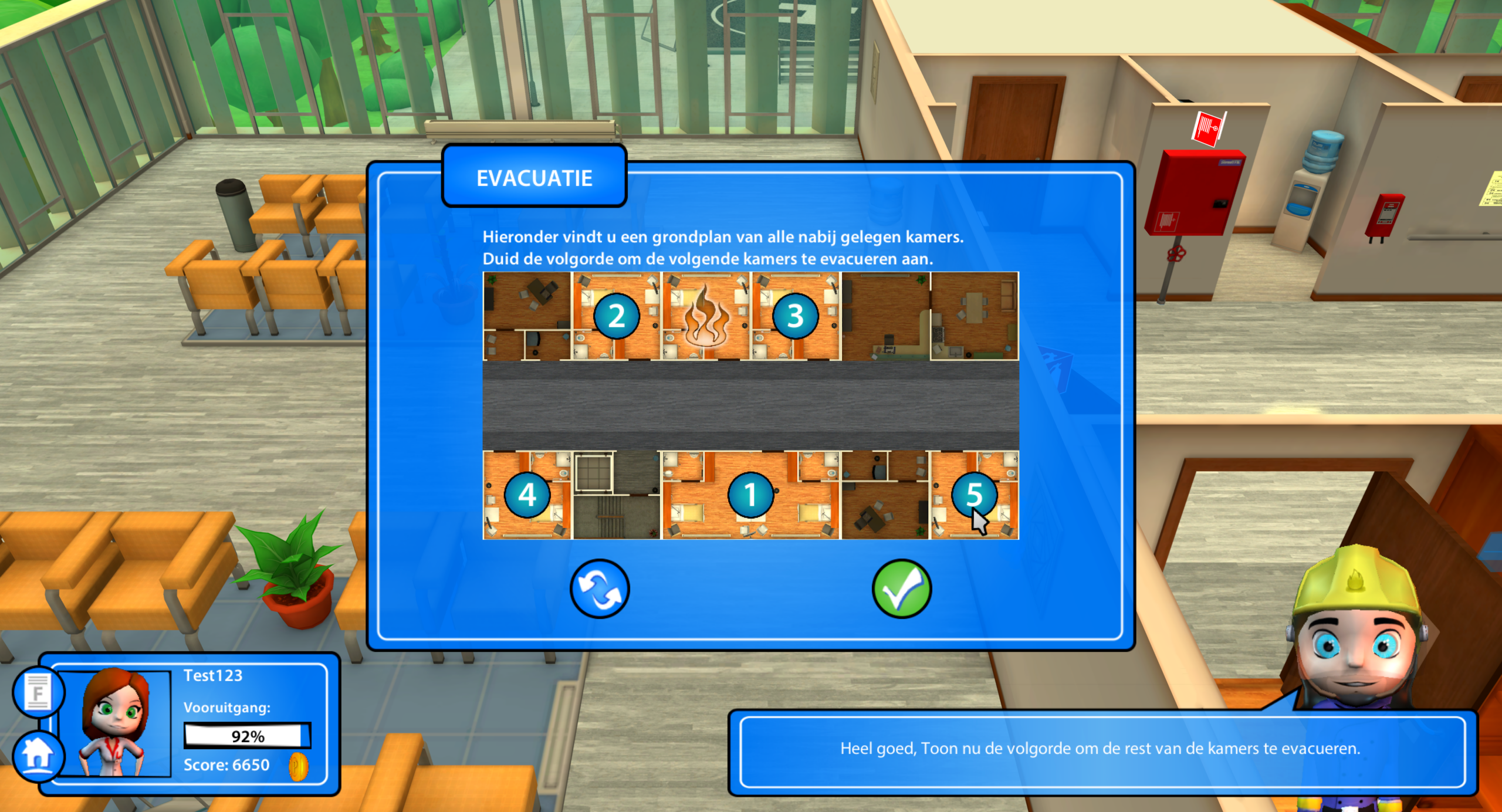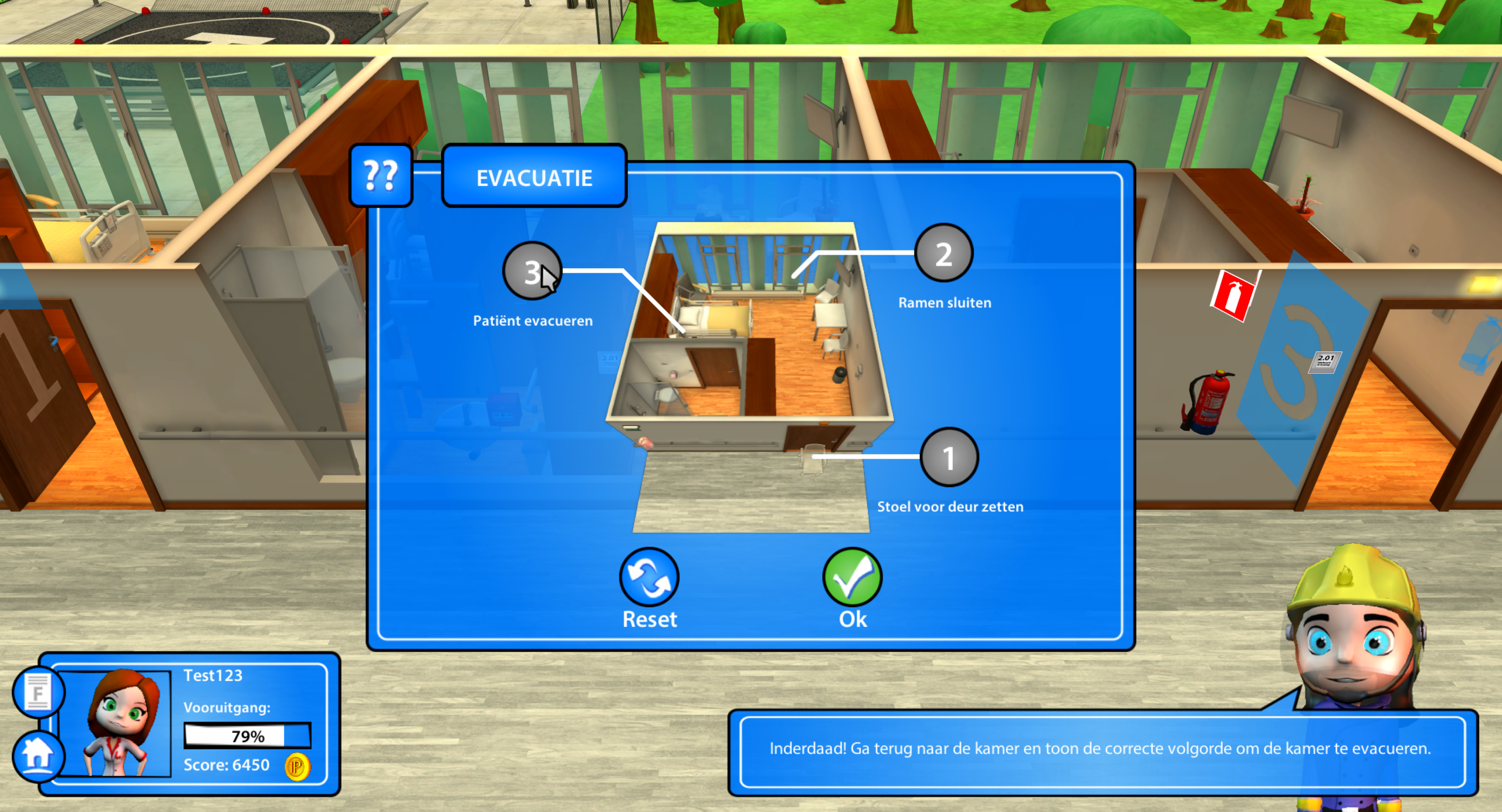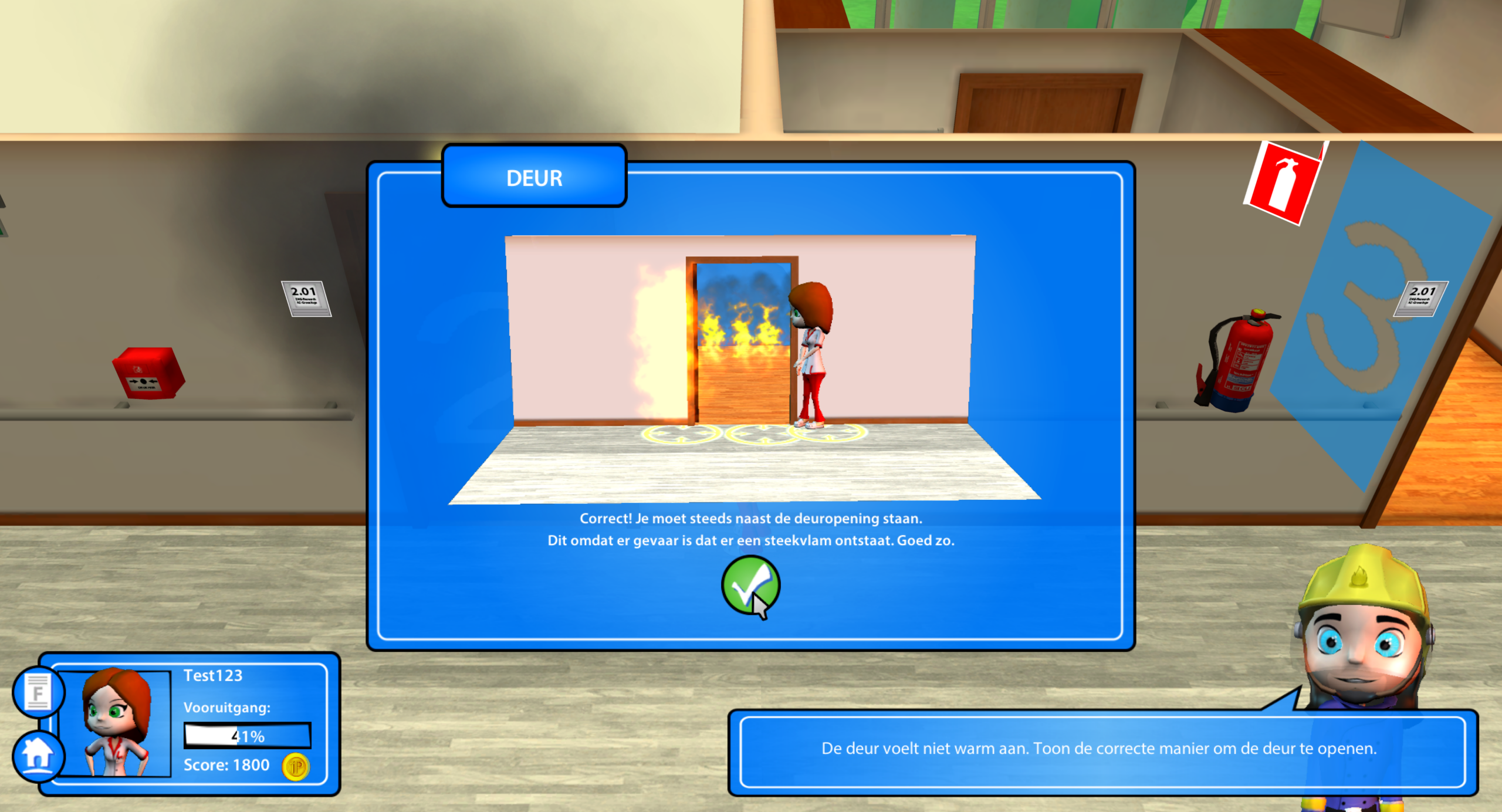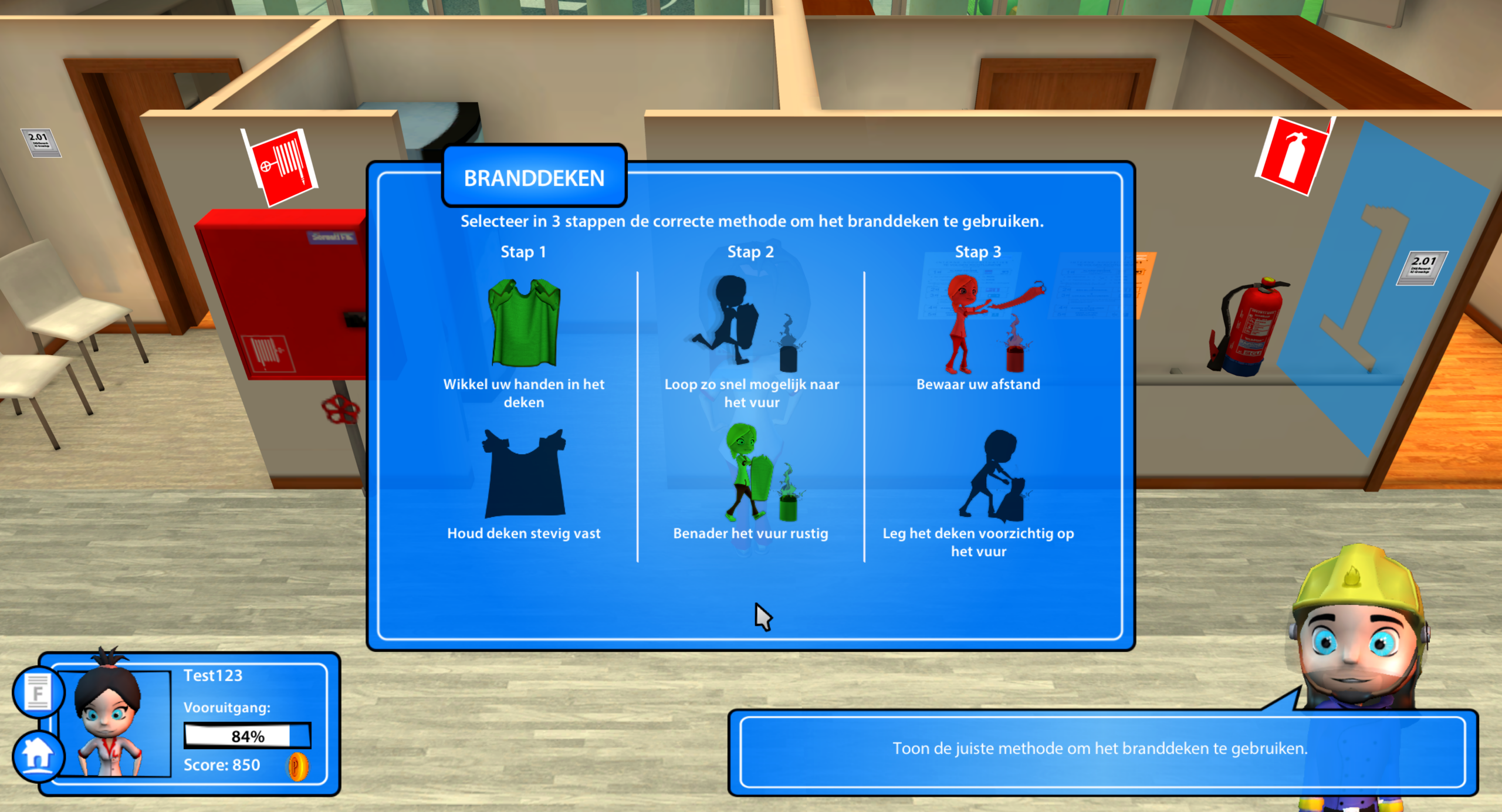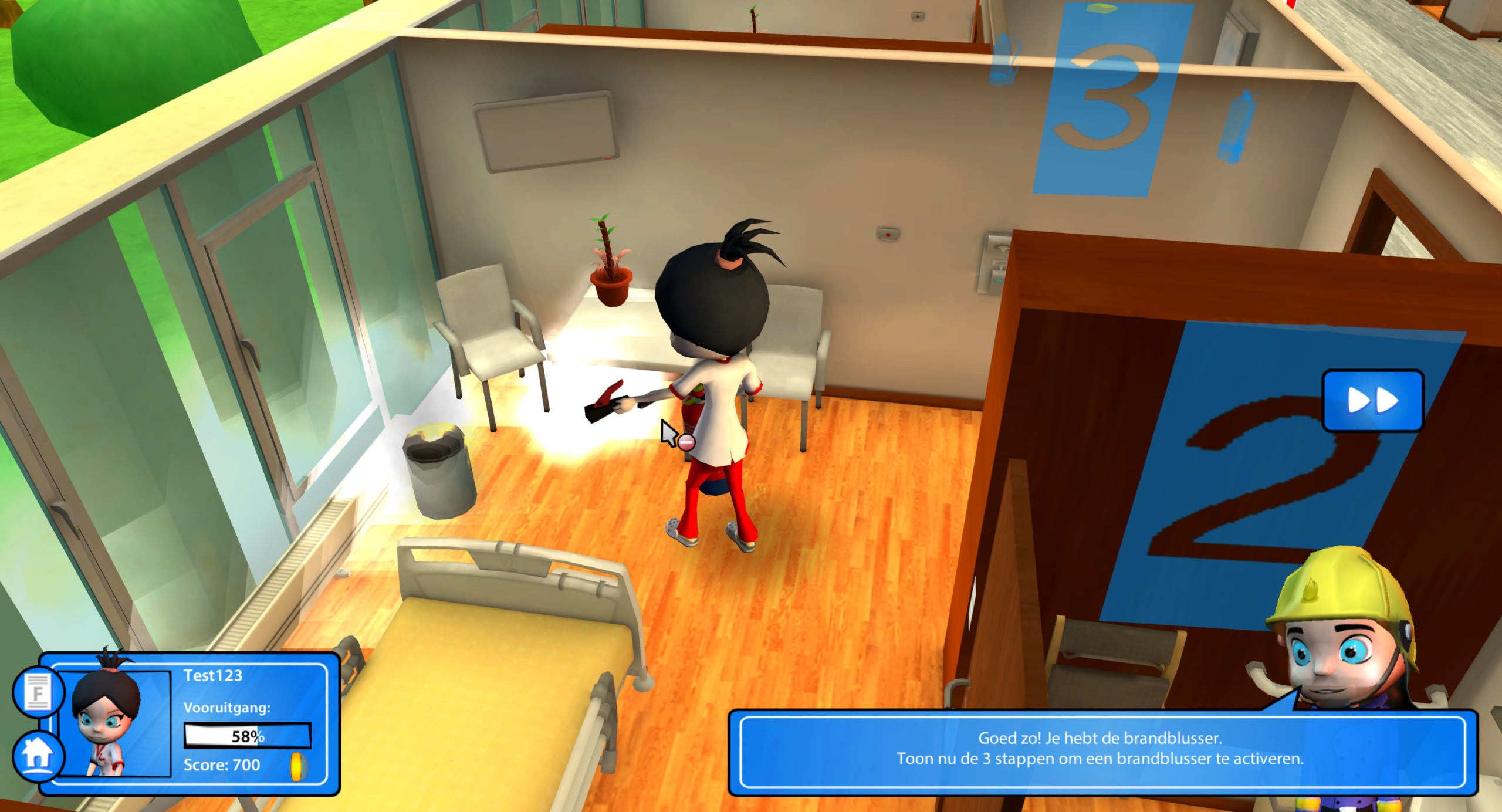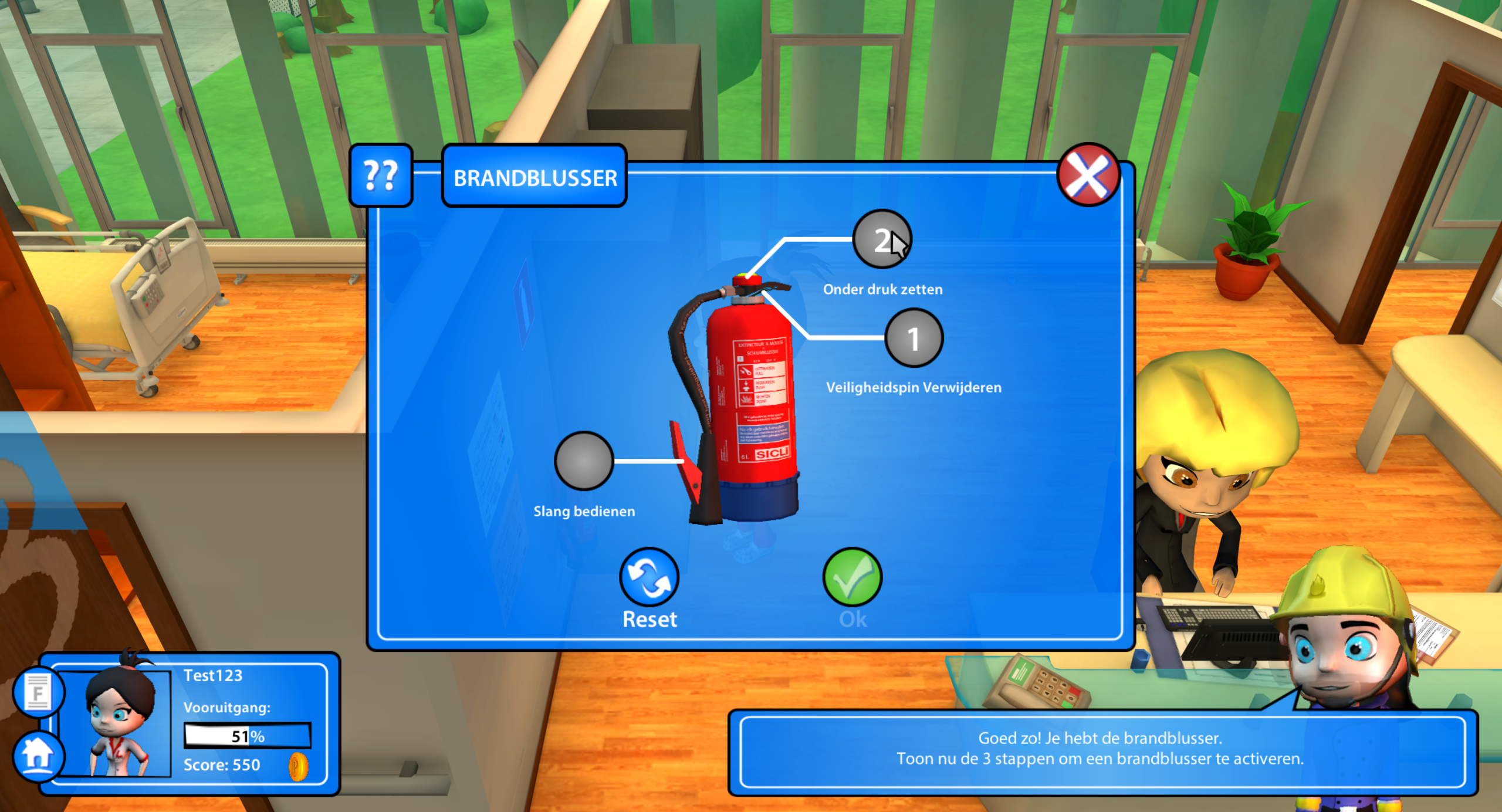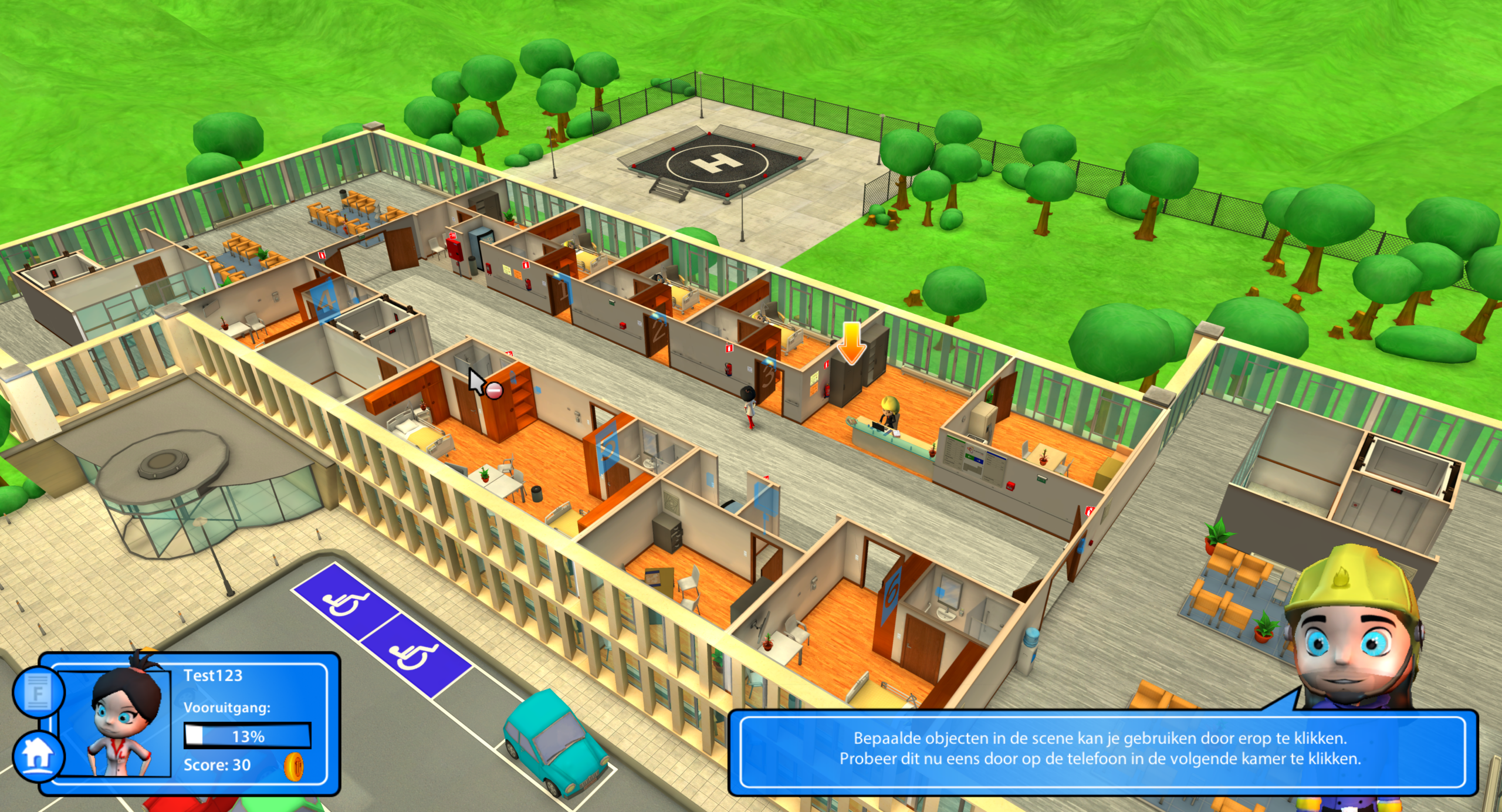
Players begin by selecting a role that matches their profession within the hospital, including doctor, nurse, manager, care worker, kitchen staff, or technical personnel. This allows the training to feel more relevant to the player’s daily responsibilities and work environment.
Learning Through Scenarios and Simulation
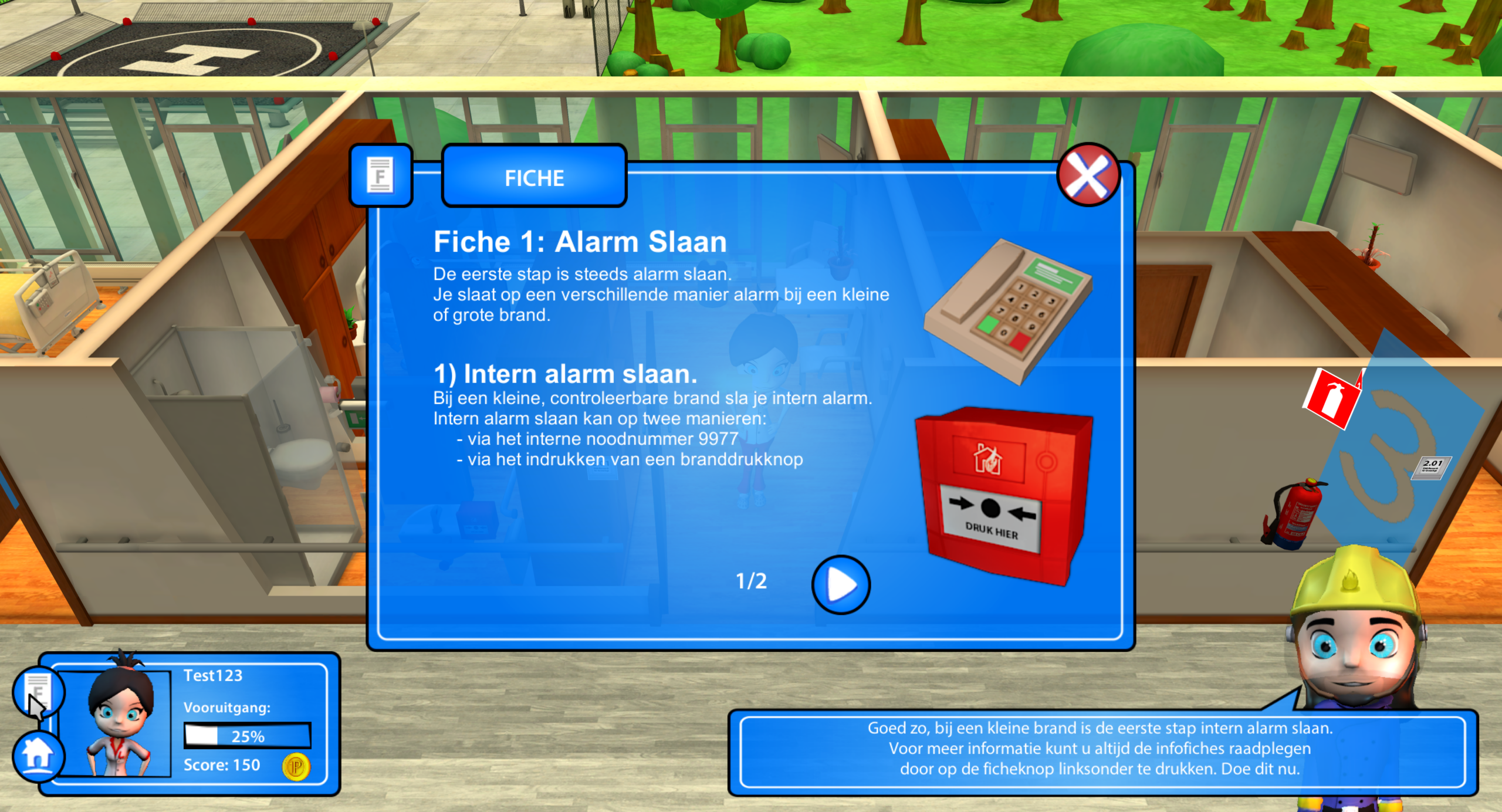
The game combines instructional content with practical exercises. Players progress through a series of training modules covering topics such as small fires, smoke incidents, and larger fire emergencies before applying their knowledge in realistic scenarios. Information sheets, multiple-choice challenges, and interactive 3D animations help reinforce the correct procedures and safety protocols.
To ensure the experience remained accessible to a wide audience, the design was shaped through extensive user testing and co-creation sessions with hospital staff. This user-centred approach resulted in an intuitive interface and gameplay structure that could be used by employees with very different levels of digital literacy.
Beyond Traditional E-Learning
A key innovation of the use case was the integration of learning outcomes into a Learning Management System (LMS). This enabled instructors and organisations to track progress, assess knowledge acquisition, and support certification processes through a single platform.
The project demonstrated how game technologies can increase engagement with mandatory training programmes while maintaining educational effectiveness. By combining simulation, assessment, and role-specific content, the Fire Prevention Serious Game provided a practical example of how serious games can support professional learning in healthcare and other safety-critical sectors.